
云南省开远市第一中学校2023-2024学年高二上学期9月月考英语试题


开远市第一中学校 2023 年秋季学期高二年级
9 月月考
英 语
2023.09
考生注意:
1.本试题分为四部分,共 4 页。试题满分 150 分,考试时间 120 分钟。
2.考生作答时,请将答案填涂在答题卡上。超出答题区域书写的答案无效,在试
卷、草稿纸上作答无效。
3.考试结束后,请将答题卡上交。
第一部分 听力(共两节,满分 30 分)
做题时,先将答案标在试卷上。录音内容结束后,你将有两分钟的时间将试卷上的答案转涂到答
题卡上。
第一节(共 5小题;每小题 1.5 分,满分 7.5)
听下面 5段对话。每段对话后有一个小题,从题中所给的 A、B、C三个选项中选出最佳选项。
听完每段对话后,你都有 10 秒钟的时间来回答有关小题和阅读下一小题。每段对话仅读一遍。
1.Where does the woman want to go?
A. A park. B. A zoo. C. A museum.
2.What is the man doing?
A. Making an invitation. B. Making an apology. C. Making a complaint.
3.What is the third class?
A. English. B. Chemistry. C. Chinese.
4.What does the man want to do?
A. Buy batteries. B. Choose a camera. C. Change a toy.
5.Whom is the birthday party for?
A.Lisa . B. Lily. C. Jack.
第二节(共 15 小题;每小题 1.5 分,满分 22.5)
听下面 5段对话或独白。每段对话或独白后有几个小题,从题中所给的 A、B、C三个选项中选
出最佳选项,并标在试卷的相应位置。听每段对话或独白前,你将有时间阅读各个小题,每小题
5秒钟;听完后,各小题将给出 5秒钟的作答时间。每段对话或独白读两遍。
听第 6段材料,回答第 6、7题。
6.What will the man do tomorrow?
A. Book a hotel. B. Do some shopping. C. Pick up his daughter.
7.What color does her mother like most in the girl’s opinion?
A. Bright red. B. Pink. C. Yellow.
听第 7段材料,回答第 8至10 题。
8.What are the speakers preparing for?
A. A festival. B. A camping trip. C. A birthday party.
9.What can the man cook?
A. Fruit salad. B. Fried eggs. C. Chicken wings.
10.What fruit does the woman want to buy?
A. Apples. B. Bananas. C. Peaches.
听第 8段材料,回答第 11 至13 题。
11.When will the lecture be given?
A. At 5:30 pm today. B. At 5:40 pm tomorrow. C. At 5:50 pm tomorrow.
12.What does Albert ask Brandon to do?
A. Show up on time. B. Send him a message. C. Ring him up again.
13.Where will Brandon meet Albert?
A. At the entrance. B. At the professor’s home. C. In the lecture hall.
听第 9段材料,回答第 14 至16 题。
14.What should we do first to deal with burns?
A. Press the burns for five minutes.
B. Get some medicine for the burns.
C. Put the burns under cold running water.
15.What can reduce the pain of the burns?
A. Pressing the burns. B. Bandaging the burns. C. Putting ice on the burns.
16.What's the man's last piece of advice?
A. Drinking cold water. B. Taking some medicine. C. Staying away from children.
听第 10 段材料,回答第 17 至20 题。
17.How did Heather learn to surf?
A. From a website. B. From her father. C. From her friends.
18.Where did Heather surf?
A. In Los Angeles. B. In California. C. In San Diego.
19.At what time of the day did Heather see the shark?
A. In the morning. B. In the afternoon. C. In the evening.
20.Why did the shark stop following Heather?
A. It was hit by her surfboard. B. A lifeboat scared it away. C. She swam very fast.
第二部分 阅读(共两节,满分 50 分)
第一节(共 15 小题;每小题 2.5 分,满分 37.5 分)
阅读下列短文,从每题所给的 A、B、C、D四个选项中选出最佳选项。
A
Different countries celebrate Christmas in different ways. We asked some of our friends to explain
what happens in their countries. This is what they told us:
France
In France, Christmas is always called Noël. Everyone has a Christmas tree, sometimes decorated in
the old way with red ribbons and real white wax candles. Fir trees in the garden are often decorated too
with lights on all night.
Father Christmas is called Père Noël. The Christmas meal is an important family gathering with
good meat and the best wine. Few people send Christmas cards. More people send New Year cards to
wish everyone good luck and joy for the New Year. These days Christmas lunch is a starter of foie gras
(a strong tasting pate made from goose liver) followed by lunch of seafood—usually including lobsters
and oysters.
New Zealand
Christmas starts for us with gifts under the tree, to be opened on Christmas morning. Then it's onto
a Christmas lunch either at home or at one's parents place. Turkey or chicken with all the trimmings (佐
料) is eaten. Then comes tea time. It is a BBQ for friends and family to get together, and have a few
beers or wines with the meal!
Russia
In the days of the Soviet Union, Christmas was not celebrated very much. New Year was the
important time—when "Father Frost" brought presents to children. With the fall of Communism,
Christmas can be openly celebrated either on December 25th; or more often on January 7th. This
unusual date is because the Russian Orthodox church uses the old "Julian" calendar for religious
celebration days. Special Christmas food includes cakes, pies and "meat dumplings".
Sweden
The most important day is Christmas Eve. A special Christmas meal is eaten on Christmas Eve—
ham (pork), herring fish, and brown beans—and this is the time when families give presents to each
other. Many people attend a church meeting early on Christmas Day.
21. Why do people in France send New Year cards?
A. To tell their friends the New Year is coming.
B. To ask for some special presents.
C. To invite their friends to family gathering.
D. To send their friends best wishes and happiness for the New Year.
22. What do they have in common when celebrating Christmas?
A. A special meal is prepared. B. Everyone has a Christmas tree.
C. Parents give gifts to their children. D. People attend a church gathering.
23. Which country celebrates Christmas "twice"?
A. France. B. New Zealand. C. Sweden. D. Russia.
B
One summer day as I was heading to the teaching building, I heard someone call my name. I turned
around and saw Philip, a counselor (顾问) at our admissions office, standing with another young man.
Philip introduced me to him, Stephen, and reminded me that Stephen would be taking one of my classes.
Stephen looked at me. With a somewhat painful expression, he asked if my class was going to be
hard and if he would be able to pass. I introduced all the things that he would be expected to learn. As we
talked, I saw Stephen’s eyes getting big with fear.
I told him to do all of his assignments, and to hand them in on time. Rather than being
overwhelmed (压倒) by all of the work, I told him the most successful students made a master calendar
of all the assignments so they could plan their workload.
As the fall semester went on, I learned more of Stephen’s story. It had taken him longer to finish the
assignments than most young people. Family members, including his mother, kept reminding him that he
was a failure. But he kept at it and didn’t take them to heart. He told me that before coming to our
college, no one believed he could manage it.
Stephen didn’t become an A student. Still, he managed to pass most of his courses by being in class
every day, turning in all of his assignments on time and breaking down his studying into bite-sized parts.
By passing course after course, he began to gain a measure of self-esteem.
On his graduation day, he walked up to me, and said, “Thank you.”
24.What can we learn about the author according to the passage?
A.He wouldn’t have met Stephen without the introduction of Philip.
B.He told Stephen how to deal with his studies.
C.He helped Stephen get an A in his class.
D.He didn’t believe that Stephen could study in college.
25.What does the passage mainly tell us about Stephen?
A.He was an average student but hard-working.
B.He was an excellent student, but didn’t have self-esteem.
C.He was a little stupid and didn’t do well at school.
D.He was far from a top student because of his failure.
26.What lesson can we learn from the passage?
A.A good beginning is half done. B.One bite at a time.
C.Haste makes waste. D.Look before you leap.
27.According to Stephen’s questions to the author, what do we know about Stephen?
A.He wasn’t very confident about himself. B.He didn’t want to attend the author’s class.
C.He had never been an A student. D.He couldn’t pass the author’s exam.
C
There are many experiences a Westerner can describe as a “culture shock” in China, one of the
fastest-growing economies, like eating mouthwatering baozi for breakfast. These experiences, however,
paled in comparison to the one I experienced during my time in an organization I’ve been serving in for
two years to provide free educational tours at my leisure — the advancement and equalizing of China’s
known wealth disparity (差异) through the social network and cashless payment giant, WeChat, which I
rarely used before.
Last month, the organization led a thrilling trip to camp. Initially, we went through a village kept
alive by the residents. The views there are so attractive and refreshing. Walking through endless red
apple trees, I saw an elderly woman who gently offered to sell me apples. Unfortunately, I informed her I
didn’t have cash on hand. She quickly told me to scan the QR code on her phone, which in seconds
would get my money into her bank account via WeChat. Needless to say, I was blown away. And of
course, the apples were tasty.
As an advocate of financial growth opportunities in under-served communities, it was inspiring to
witness that technology lets people contribute to the economy regardless of socioeconomic background
in China. Though the socioeconomic problems remain to some extent, access to and adoption of
technology creating financial opportunities transforms the lives of everyday citizens and enables
communities to flower.
While I once didn’t believe a “cashless society” was possible and thought it could cause more
unfavorable conditions, I now stand corrected. Perhaps it might take longer for New York City to adapt,
as we lag behind(滞后) in this transformation and there is so much we can learn. I also wonder what the
human race can achieve when technology provides endless opportunities for people of all backgrounds
to advance.
28. What does the first paragraph tell us about the author?
A. She is struggling with culture shock. B. She does voluntary work when free.
C. She really enjoys Chinese breakfast. D. She likes using social networks.
29. Which of the following surprised the author during the trip?
A. The way of paying. B. Taste of the apples.
C. Popularity of WeChat. D. Scenery of the village.
30. What is the author’s attitude to a cashless society now?
A. Critical. B. Positive. C. Concerned. D. Curious.
31. What is the best title for the text?
A. Humans will achieve more with technology B. New York will be the next cashless society
C. Technology helps improve everyday life D. China becomes the fastest-growing economy
D

相关推荐
-
河南省H20高中联盟2024-2025学年高三下学期4月联考试题 物理 PDF版含解析
 2025-05-31 62
 -
河南开封市、周口市、商丘市2025届高三下学期3月第二次质量检测试题 政治 PDF版含答案
 2025-05-31 87
 -
河南开封市、周口市、商丘市2025届高三下学期3月第二次质量检测试题 数学 PDF版含答案
 2025-05-31 62
 -
河南开封市、周口市、商丘市2025届高三下学期3月第二次质量检测试题 地理 PDF版含答案
 2025-05-31 48
 -
八省八校部分重点中学2025届高三下学期3月联合测评试题(T8联考) 政治 PDF版含解析(河南版)
 2025-05-31 41
 -
八省八校部分重点中学2025届高三下学期3月联合测评试题(T8联考) 生物 PDF版含解析(河南版)
 2025-05-31 104
 -
八省八校部分重点中学2025届高三下学期3月联合测评试题(T8联考) 化学 PDF版含解析(河南版)
 2025-05-31 87
 -
八省八校部分重点中学2025届高三下学期3月联合测评试题(T8联考) 地理 PDF版含解析(河南版)
 2025-05-31 75
 -
八省八校部分重点中学2025届高三下学期3月联合测评试题(T8联考) 历史 PDF版含解析(河南版)
 2025-05-31 90
 -
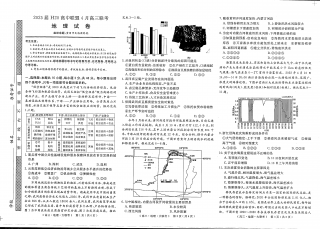
河南省H20高中联盟2024-2025学年高三下学期4月联考试题 地理 PDF版无答案
 2025-05-31 102
作者:envi
分类:分省
价格:3知币
属性:6 页
大小:44.99KB
格式:DOCX
时间:2024-11-27
作者详情

相关内容
-
八省八校部分重点中学2025届高三下学期3月联合测评试题(T8联考) 生物 PDF版含解析(河南版)
分类:分省
时间:2025-05-31
标签:无
格式:PDF
价格:3 知币
-
八省八校部分重点中学2025届高三下学期3月联合测评试题(T8联考) 化学 PDF版含解析(河南版)
分类:分省
时间:2025-05-31
标签:无
格式:PDF
价格:3 知币
-
八省八校部分重点中学2025届高三下学期3月联合测评试题(T8联考) 地理 PDF版含解析(河南版)
分类:分省
时间:2025-05-31
标签:无
格式:PDF
价格:3 知币
-
八省八校部分重点中学2025届高三下学期3月联合测评试题(T8联考) 历史 PDF版含解析(河南版)
分类:分省
时间:2025-05-31
标签:无
格式:PDF
价格:3 知币
-
河南省H20高中联盟2024-2025学年高三下学期4月联考试题 地理 PDF版无答案
分类:分省
时间:2025-05-31
标签:无
格式:PDF
价格:3 知币


