
广东省惠州市惠东中学英语八年级上人教版知识点大全Unit9


知识点大全 SA
基本句型 1
Can you come to my party? 你能来我的派对吗?
肯定回答:
Yes, I can.
Sure.
Certainly.
Of course. I’d like/love to.
Yes, I’d like/love to.
Sure, I’d like/love to.
否定回答:
No, I can’t. I …
Sorry, I can’t. I …
I am sorry, I can’t.
I’m afraid not. I …
No/Sorry, I’m not free/available.
Sorry, I’d like/love to. But I …
(说明:若不能来,则用上述回答来有礼貌地拒绝, 一般情况下需要说明不能接受
邀请的原因以表示歉意。因此省略号表示对不能去的情况的解释说明,需在本单元
慢慢积累)
小知识:come to one’s party 动词词组,意为“来某人的派对”
小知识:I’d = I would
总结:can 的常见用法(了解即可)
一、用于发出邀请。
e.g. Can you come to my birthday party?
e.g. Can you go to the movie with me?
二、表示能力。
e.g. I can sing and dance.
三、表示请求。
e.g. Can you help me?
回忆:情态动词 have to 与must 的区别与联系
共同点:两者都是情态动词。
区别:
1)have to 因受环境或客观因素的影响,“不得不”做某事,其也常常翻译为
“必须”。(别人或环境逼自己)
must 是主观上严格要求自己,告诉自己“必须”做某事。(自己逼自己)
2)have to 有人称,数与时态上的变化。而 must 没有人称,数与时态的变化。
说明:一般来说情态动词没有人称与数的变化(have to 是个例外),部分情态动
词有时态上的变化(can 与could)。
(总结:简单来说,have to 虽为情态动词,但也只有 have to 后用动词原形这一
点与传统的情态动词相同。其他的规则与传统情态动词均不同,为了便于理解可以
将have to 当做实意动词去理解)
e.g. I have to go home. (主语的人称变)
e.g. He has to go home.
e.g. My friend has to go home. (主语的数变)
e.g. My friends have to go home.
e.g. My friends have to go home. (谓语的时态变)
e.g. My friends had to go home.
3)也正因为 have to 需要当做实意动词理解,因此 have to 的否定需要根据句子
的主语的人称、数及时态变为相应的形式。如:don’t have to, doesn’t have
to, didn’t have to 等)。意思是“不必做···”。
而must 的否定 mustn’t 意思是“禁止···,绝对不许··,完全不许···”。(注意:
mustn’t=must not)
e.g. You mustn’t go home. 你禁止回家。
回忆:含有情态动词 have to 的陈述句变
一般疑问句与特殊疑问句
在英语中,我们认为 have to 也是情态动词。但出现 have to 的陈述句在变一般疑
问句与特殊疑问句时,其变化规则与实意动词单独作谓语的陈述句变疑问句的规则
相同。
(通过下列含有一般的情态动词 can 的陈述句,实意动词单独作谓语的陈述句与含
1

有情态动词 have to 的陈述句变疑问句的实例对比,很明显可以证明上述结论。)
以一般情态动词 can 为例。
I can dance. —> Can you dance?
I can dance. —> Who can dance?
I can dance. —> What can you do?
以实意动词 eat 为例。
I eat dinner at six. —> Do you eat dinner at six?
I eat dinner at six. —> Who eat dinner at six?
I eat dinner at six. —> What do you do at six?
I eat dinner at six. —> What do you eat at six?
I eat dinner at six. —> When do you eat dinner?
以特殊情态动词 have to 为例。
She has to go home. —> Does she have to go home?
She has to go home.—> Who has to go home?
She has to go home.—> What does she have to do?
补充:其他表示邀请来派对的句型。
1)Can/Could/Would you come to my party?
直译:你能来我的派对吗?意译:你愿意来我的派对吗?
2)Would you like/love to come to my party? 你想要来我的派对吗?
3)I hope you can come to my party. 我希望你能来我的派对。
4)Please come to my party. 请来我的派对吧。
5)How/What about coming to my party? 来我的派对怎么样?
6)Why not come to my party? 为何不来我的派对呢?
重要的动词词组
help one’s parents 帮助某人的父母。
prepare for an exam 为考试做准备。
prepare for the math test 为数学考试做准备。
小知识:prepare v. 准备···。
常见搭配:
1)prepare sth. (for sb.) 动词词组,意为“(为某人)准备···”
e.g. I prepared a room for my friend.
e.g. John wants to prepare a gift for mom.
2)prepare for sth. 动词词组,意为“为···而做准备”
e.g. Sorry, I can’t come to your birthday party. I have to prepare for an
English test.
go to the doctor = see a doctor 去看医生。
e.g. Sorry, I must go to the doctor.
have the ;u 得了流感
e.g. I may have the ;u. 我或许得了流感。
小知识:;u n.流感。(不可数)
meet one’s friend(s) 见某人的朋友,和某人的朋友碰面。
知识点大全 2c
I’m not available. 我没空。
小知识:
available adj. (指人)有空的,可会见的。
e.g. Sorry, I am not available. I have to do my homework. 对不起,我没空。
我必须做我的作业。
e.g. John was not available yesterday. He had to go to the doctor. But he
will be available tomorrow.
补充:available adj. (指物)可用的,可获得的。
e.g. The tickets are still available. Let’s go to the movie. 意译:票依然有
售。让我们去看电影吧。
I have too much homework this weekend. 我这周末有太多作业了。
回忆:too many, too much, so many, so much 的区别。
Maybe another time. 直译:也许另一个时间吧。意译:也许换个时间吧。
知识点大全 2d
My cousin Sam from Xi’an is going to be here.
我西安的表弟山姆打算来这。
分析:from Xi’an 在此处作了后置定语。
小知识:Xi’an 专有名词,意为“西安”。(注意中间的符号)
2
I remember we went bike riding together last fall when he visited you.
我记得去年秋天当他来探望你时我们一起骑单车兜了风的。(建议积累)
思考:试分析句子结构。
小知识:go bike riding 骑自行车兜风。
e.g. My wife and I go bike riding every Sunday. 我和我太太每周日去骑自行
车兜风。
e.g. Can you go bike riding with me?
小知识:fall n. 秋天。(不可数)
(说明:美式英语中为 fall,英式英语中为 autumn)
补充:in fall/autumn 介词短语,意为“在秋天”。
补充:in spring/summer/winter 介词短语,意为“在春天/夏天/冬天”
e.g. The water in fall/autumn is blue. But it’s white in winter. 秋天的水是
蓝色的。但冬天它是白色的。(作后置定语,作时间状语)
小知识:last fall/autumn 意为“去年秋天”(常做时间状语)
e.g. We went to the science museum last fall/autumn.
But I am afraid I can’t. 但恐怕我没法去。
复习:主语 + be + afraid +宾语从句。 意为“主语恐怕···”(用于委婉的表达想
法意见)
e.g. I am afraid that I can’t help you. 我恐怕我不能帮你。
e.g. He was afraid that he couldn’t go to school. 他恐怕没法去上学。
I have an exam on Monday so I must prepare for it.
我周一有考试,所以我必须为它做准备。
小知识:exam n. 考试(可数)(其为元音音素开头)
(说明:exam 往往指比较大型的,正式的考试如期末考试,入学考试等。而 test
往往指小型的考试,测验如随堂考试等)
That’s really too bad. 意译:那真是的太遗憾了。(建议积累)
But Sam isn’t leaving until next Wednesday. 但是山姆直到下周三才会离开。
(建议积累)
分析:该例句中的现在进行时很显然是“现在进行时表将来”的用法。(了解即
可)
小知识:until 介词,意为“直到···”。
小知识:not ··· until 的用法
until 用于否定句中,表示“直到···才···”,表示动作从until 后的时间才发生,主
句动词为延续性动词或非延续性动词。
(注意:“not ··· until”结构在翻译的时候与传统的直译不太一样。例如例句不能
翻译为“但是山姆没有离开直到下周三”,而应该翻译为“但是山姆直到下周三才
离开”。)
e.g. A tired child didn’t get home until 7 p.m. 一个疲倦的孩子直到晚上7点
才到家。
e.g. I didn’t do my homework until the next morning. 我直到第二天早晨才
做作业。
e.g. I’ll not be available until 5 o’clock. 直到第二天早晨我才会有空。
Can you hang out with us on Monday night? 你周一晚上能和我们一起闲逛吗?
小知识: hang out (with sb.) 动词词组,意为“(和某人一起)闲逛”。
(hang 的过去式为 hung)
e.g. I don’t like to hang out with my parents.
e.g. After dinner, I went out and hung out with my friends.
Catch you on Monday! 周一见!
小知识:该例句常用于口语,表示“周一见!”
补充:catch v. 追捕,抓住(过去式为 caught)
常见用法:catch sb./sth. 动词词组,意为“抓住···”。
e.g. A policeman caught a criminal. 一个男警察抓到了一名罪犯。
e.g. My little brother can’t catch me. 我的小弟弟没法抓住我。
e.g. Cats catch mice. 猫捉老鼠。
catch v. 赶上(过去式为 caught)
常见搭配:catch a/the bus 动词词组,意为“赶上巴士”。
e.g. I didn’t catch the bus yesterday morning. They was why I was late
for school.
知识点大全 GF
They might have to meet their friends. 他们或许不得不去看他们的朋友们。
3

相关推荐
-
《中考真题物理》2024年广东省广州市中考物理试题(原卷版)
 2024-12-26 32
 -
《中考真题物理》2024年广东省广州市中考物理试题(解析版)
 2024-12-26 36
 -
《中考真题物理》2024年甘肃省兰州市中考物理试题(原卷版)
 2024-12-26 48
 -
《中考真题物理》2024年甘肃省兰州市中考物理试题(解析版)
 2024-12-26 34
 -
《中考真题物理》2024年甘肃省白银市中考物理试题(原卷版)
 2024-12-26 27
 -
《中考真题物理》2024年甘肃省白银市中考物理试题(解析版)
 2024-12-26 68
 -
《中考真题物理》2024年福建省中考物理试题(原卷版)
 2024-12-26 84
 -
《中考真题物理》2024年安徽省中考物理试题(原卷版)
 2024-12-26 83
 -
《中考真题物理》2024年安徽省中考物理试题(解析版)
 2024-12-26 84
 -
《中考真题物理》2024年福建省中考物理试题(解析版)
 2024-12-26 67
作者:envi
分类:初中
价格:3知币
属性:9 页
大小:31.07KB
格式:DOCX
时间:2025-02-21
作者详情

相关内容
-
2020年山东青岛市初中学业水平考试生物试题 PDF版 (2)
分类:初中
时间:2025-03-26
标签:无
格式:PDF
价格:3 知币
-
2020年内蒙古通辽市八年级学业考试生物试卷(图片版,有答案)
分类:初中
时间:2025-03-26
标签:无
格式:PDF
价格:3 知币
-
2020年湖南省普通高中学业水平合格性考试模拟信息卷答案(六) 生物PDF版
分类:初中
时间:2025-03-26
标签:无
格式:PDF
价格:3 知币
-
2020年湖南省普通高中学业水平合格性考试模拟信息卷(六) 生物答案PDF版
分类:初中
时间:2025-03-26
标签:无
格式:PDF
价格:3 知币
-
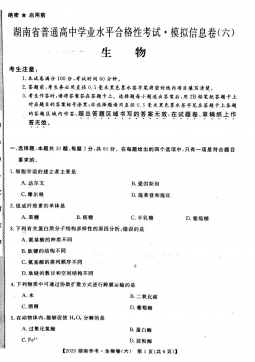
2020年湖南省普通高中学业水平合格性考试模拟信息卷(六) 生物PDF版
分类:初中
时间:2025-03-26
标签:无
格式:PDF
价格:3 知币


