
江苏省南京市某校2024-2025学年高二上学期第二次月考试题(期中模拟) 英语 Word版含答案

高二上市统考模拟 2 英语 2024.10
出卷: 审核:
第一部分 听力 (共两节,满分 30 分)
第一节(共 5小题;每小题 1. 5 分,满分 7. 5 分)
听下面 5段对话。每段对话后有一个小题,从题中所给的 A、B、C三个选项中选出最佳选项,并标
在试卷的相应位置。听完每段对话后,你都有 10 秒钟的时间来回答有关小题和阅读下一小题。每段对话
仅读一遍。
1. When did the woman leave for the movie?
A. 5 minutes ago. B. 15 minutes ago. C. 30 minutes ago.
2. Which food does the man usually avoid?
A. Cream. B. Biscuits. C. Chocolate.
3. What is the probable relationship between the speakers?
A. Relatives. B. Fellow students. C. Teacher and student.
4. Who told Marie about the accident?
A. Tom. B. Her father. C. Lucy.
5. How many times has the man tried to wake Peter up?
A. Once. B. Twice. C. Three times.
第二节(共 15 小题;每小题 1. 5 分,满分 22. 5 分)
听下面 5段对话或独白。每段对话或独白后有几个小题,从题中所给的 A、B、C三个选项中选出最
佳选项,并标在试卷的相应位置。听每段对话或独白前,你将有时间阅读各个小题,每小题 5秒钟;听完
后,各小题将给出 5秒钟的作答时间。每段对话或独白读两遍。
听第 6段材料,回答第 6、7题。
6. How does the man feel about the American football match?
A. Confused. B. Disappointed. C. Interested.
7. Why did the woman come to watch the game?
A. She thought it was a soccer game.
B. She’d like to share the man’s hobby.
C. She wanted to see how exciting it was.
听第 7段材料,回答第 8至10 题。
8. What does the man ask the woman about?
A. The gifts for new co-workers.
B. The order of new notepaper.
C. The address of new company.
9. Why does the man tell the woman to wait?
A. The company’s address might change.
B. Carl told Geoff about a mistake.
C. The paper is too expensive.
10. How does the woman feel about the news?
A. Angry. B. Doubtful. C. Encouraged.
听第 8段材料,回答第 11 至13 题。
11. What are the speakers mainly discussing?
A. Which fixing company they should choose.
B. How much they have spent.
C. When the fixing will begin.
12. What does the woman say about Prestons?
A. They are unreliable.
B. They do high-quality work.
C. They charge the lowest price.
13. What does the woman agree to do?
A. Ask for a lower price.
B. Respond to all the builders.
C. Email Valley Builders.
听第 9段材料,回答第 14 至17 题。
14. Where are the speakers probably?
A. In an office. B. In a lift. C. In a car.
15. How soon will the man be interviewed?
A. In 30 minutes. B. In 15 minutes. C. In 10 minutes.
16. Why does the woman want to get the job?
A. She likes the working time.
B. She likes working in downtown.
C. She likes going to work by subway.
17. What will the woman do next?
A. Answer the phone. B. Talk more with the man. C. Visit some shops nearby.
听第 10 段材料,回答第 18 至20 题。
18. How do scientists at University College London measure memory loss?
A. By recording the time people spend on TV.
B. By tracking people’s living habits.
C. By using memory and fluency tests.
19. What leads to memory decline in older people?
A. Watching television for hours.
B. Playing video games for hours.
C. Surfing the Internet for hours.
20. What do the researchers advise older people to do?
A. Make more friends.
B. Sleep eight to ten hours per night.
C. Balance TV viewing with other activities.
第二部分 阅读理解(共两节,满分 50 分)
第一节 (共 15 小题;每小题 2.5 分,满 37.5 分)
阅读下列短文,从每题所给的 A、B、C 和D 四个选项中,选出最佳选项。
A
Your Harvard Summer School Experience
Harvard Summer School offers more than 400 courses for college students in more than 60 different
subject areas. Our open-enrollment courses are offered in a variety of adaptable formats, so you can find the
option that works best with your busy schedule.
In our classrooms—whether in person or online—you’ll find:
*Harvard faculty and industry experts dedicated to helping you expand your skills and sparking
intellectual curiosity
*A rigorous learning environment filled with rich interactions
*An intensive curriculum designed to be completed in a shorter summer session than a fall or a spring
term
*An international network of peers like you—driven, curious, and committed to growth
*Access to Harvard's famous libraries, museums, and computer labs
Details:
Non-credit courses: They provide an opportunity for personal growth without the need to earn credits.
These flexible courses cater to diverse interests and schedules. They allow learners to explore new subjects
without formal assessments. Their durations are variable, ranging from 4 weeks to 6 weeks.
4-credit courses: These courses are condensed into a more focused time frame, typically running for
about 4 weeks. They are designed for students who want to complete a course well and quickly.
6-credit courses: They are structured to last for approximately 6 weeks, offering a more extended
learning period that allows for a deeper exploration of the subject matter.
8-credit courses: These are the most comprehensive options, usually extending over an8-week period.
They are ideal for students seeking an in-depth study experience, covering a wider range of topics or allowing
for a more thorough examination of a particular field.
21. What does Harvard Summer School feature?
A. Long duration. B. Busy schedules.
C. Flexible arrangements. D. Competitive environment.
22. What can the students do after joining Harvard Summer School?
A. Skip a fall term. B. Work in famous libraries.
C. Make friends with experts. D. Meet like-minded people.
23. Which courses are the best for the students focusing on efficiency?
A. Non-credit courses. B. 4-credit courses.
C. 6-credit courses. D. 8-credit courses.
B
“The water will turn to steam, which will power cars.” “Yeah, that’s a really cool idea.”
This conversation is
part of a lesson about technologies
that
reduce
planet-heating pollution. It was
lectured in a brand-new way, by Kirstin Milks, a science teacher at Bloomington High School. Climate
change is the story of today’s young
people’s lives. But
Milks says,“Our students need to know not just
the stuff we hear about in
the
news,but
also
the actual difference we can make in our shared future.” So, she
teaches in such an innovative way.
Creativity is at the core of
her lesson. After students
learn
the
basics of climate engineering, which
covers a range of strategies, including reflecting sunlight back into space and removing carbon dioxide from the
atmosphere, they’re asked to “come up with interesting wild ideas” to
slow global warming. In the
first round
of brainstorming, students imagined lots
of ways to
reflect light back
into the atmosphere, like
covering
the
desert
in shiny glitter (发光物). Next, students are asked to consider the potential limitations and risks to
their ideas. Take glitter in the desert, for example:“How are we going to make sure that the glitter doesn’t
get
eaten by the
rock pocket
mouse
or snakes?” Milks asks. The
student suggests making the glitter large and
smooth enough so it won’t be eaten by animals or otherwise harm them. For their final
assignment, students
present their concepts, including
their
anticipated benefits and risks.
Ben Kravitz, an assistant professor at Indiana University, who carefully watch the whole lesson, says,“The
neat thing
about
seeing all of these
ideas
come out of the classroom
is it’s not I
can’t do it. It’s we
can do
it. Humans, when
they
get
together, can do amazing things. And that’s what gives me hope.”
24. Why does Kirstin Milks lecture in an innovative way?
A. She’s bettering ways to power cars.
B. She’s inspiring students to address real problems.
C. She’s making science classes more accessible.
D. She’s helping students stay informed of climate change.
25. What does paragraph 3 mainly talk about?
A. Procedures of a lesson B. The core value of creativity.
C. Ideas of different students D. The key concept of solutions.
26. How is the last paragraph mainly developed?
A. By defining a concept. B. By quoting an expert.
C. By making a comparison. D. By providing an example.
27. Which best describes Milks’ way of teaching?
A. It ignores practical application.
B. It focuses on theoretical knowledge.
C. It encourages creative problem-solving.
D. It highlights the risks of climate change.
C
Solar eclipses (日食) happen when the Moon passes between the Earth and the Sun. These events are
always spectacular. But total solar eclipses are extra special. One such eclipse was visible across large parts of

North America on April 8, 2024. During that time, sky watchers felt surprised at the view. They also took part
in scientific research.
The eclipse was a piece of exciting news for solar science. On April 8, the Sun neared its most active
phase when the Sun gave off more radiation and a lot of charged particles from its surface. Such solar storms
threatened satellites orbiting the Earth. They even disrupted power grids on the ground. These are what the
science pros found.
“Luckily, researchers now have more scientific instruments to study our star than ever before,” said
Kelly Korreck, who is an astrophysicist. “This provides a unique chance to learn about the Sun and its effects
on our planet and its atmosphere. ”
But science pros aren’t the only ones getting in on the fun. Citizen scientists are members of the public
who help gather observations and analyze them. “There is a lot of emphasis on citizen science and having
folks do solar science projects,” Korreck said.
Scientists hoped to recruit as many phones as possible, which would spread out over the 2,000-mile-long
and 100-mile-wide path of the April 2024 eclipse. Korreck said, “That will offer views of the solar shape
from a very large number of vantage points. And it’s up to citizen scientists to do it.”
Citizen scientists were able to take part without interrupting their view of the eclipse. They just started an
app on their phone and propped it up facing the Sun at least five minutes before the Moon passed in front of
the Sun. The app handled the rest. They could get to keep copies of the pictures as a souvenir. “That was a
good chance for citizen scientists to contribute to eclipse research,” Korreck said. That’s true whether they set
up a camera or installed an app.
28. What can we learn from the first two paragraphs?
A. The total solar eclipse was visible in the entire America.
B. The total solar eclipse has some impact on the Earth.
C. The Earth gives off more radiation during solar eclipses.
D. Sky watchers contributed a lot to scientific research.
29. What did Korreck think of citizen scientists?
A. They are enthusiastic. B. They are creative.
C. They are optimistic. D. They are essential.
30. What did the scientists want to get from citizen scientists during the total solar eclipse?
A. Useful points about the total solar eclipse.
B. As many phones as possible with apps installed.
C. Observations of the total solar eclipse from different angles.
D. More scientific instruments to help observe solar eclipses.
31. What is the last paragraph mainly about?
A. What citizen scientists got from the eclipse research.
B. How citizen scientists got involved in the eclipse research.
C. How much time citizen scientists spent in taking pictures.
D. Why the total solar eclipse was a good chance for the scientists.
D
Are you eyebrow blind? TikTok users seem to think so—many have complained on the platform about
makeup wearers’ apparent inability to spot whether they’re blindly following makeup trends or wearing what
looks good on their faces. Though “eyebrow blindness” and other types of “beauty blindness” aren’t exactly
considered mental health trouble, people's tendency to follow trends—even when they look silly or take risks
doing so—is definitely a real phenomenon.
So, what does psychology say about trend following? First, following trends isn’t a sign of character
weakness or mental health trouble. Instead, says psychologist Pamela’B. Rutledge, it’s perfectly normal. The
reason for trend following relates to humans’ core need to belong to a social group and connect with others.
Multiple psychological frameworks argue that human connections are as important as basics like access to
food and shelter because humans evolved to rely on one another for survival.
But why do trends themselves have such a pull? “Our brains are hardwired to notice what’s unusual,”
Rutledge says. Thus, we notice outliers and attention-grabbers, making trends even more appealing for those
bold enough to follow them.
No one is exempt from following crazes, noticing trends, or signaling their real belonging to social
groups. But one group in particular is even easier to follow trends—even risky ones: Tweens, teens, and
young adults. As children start the road toward adult independence, they look for ways to express their
individuality. This can produce sometimes desperate attempts to prove affiliation( 隶属关系) with socially
credible in-groups and can fuel desire to stand out with the help of trends.
So, next time you put on makeup—or get dressed, order a meal in public, or purchase a vehicle—
consider that your decision may not be as personalized as you may think. “It’s really just an inborn response,
one that can be explained by our need to fit in with or stand out from the crowd.” says Rutledge.
32. According to the first paragraph,a beauty blind person might .
A. oppose makeup trends publicly
B. follow makeup trends uncritically
C. rely on social media for makeup advice
D. take risks with untested beauty products
33. What’s a primary motivation of trend following?
A. Financial profit. B. Social connection
C. Artistic expression. D. Character weakness.
34. Which can best replace the underlined words “exempt from” in paragraph 4?
A. free of B. subject to. C. exposed to. D. concerned about.
35. What might Rutledge think of trend following?
A. It’s a personalized choice.
B. It mirrors people’s mental health.
C. It results from lack of self-confidence.
D. It’s a natural response to social signals.

相关推荐
-
2024届云南三校高三下学期联考备考实用性联考(七)文科综合试卷-高中历史 -2022-2023学年七年级数学下册同步精品课堂(北师大版)
 2025-01-25 48
 -
2024届云南三校高三下学期联考备考实用性联考(七)文科综合试卷-高中地理 含解析-2022-2023学年七年级数学下册同步精品课堂(北师大版)
 2025-01-25 82
 -
2024届云南三校高三下学期联考备考实用性联考(七)理科综合试卷-高中物理 含解析-2022-2023学年七年级数学下册同步精品课堂(北师大版)
 2025-01-25 46
 -
2024届云南三校高三下学期联考备考实用性联考(七)理科综合试卷-高中物理 -2022-2023学年七年级数学下册同步精品课堂(北师大版)
 2025-01-25 67
 -
2024届云南三校高三下学期联考备考实用性联考(七)理科综合试卷-高中生物 含解析-2022-2023学年七年级数学下册同步精品课堂(北师大版)
 2025-01-25 65
 -
2024届云南三校高三下学期联考备考实用性联考(七)理科综合试卷-高中生物 -2022-2023学年七年级数学下册同步精品课堂(北师大版)
 2025-01-25 102
 -
2024届云南三校高三下学期高考备考实用性联考卷(七)英语试卷 含解析-2022-2023学年七年级数学下册同步精品课堂(北师大版)
 2025-01-25 91
 -
2024届云南三校高三下学期高考备考实用性联考卷(七)英语试卷 -2022-2023学年七年级数学下册同步精品课堂(北师大版)
 2025-01-25 95
 -
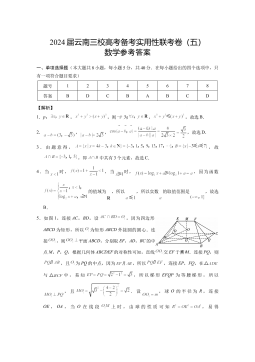
2024届云南三校高考备考实用性联考卷(五)数学-答案和解析-2022-2023学年七年级数学下册同步精品课堂(北师大版)
 2025-01-25 101
 -
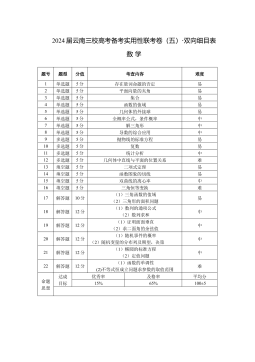
2024届云南三校高考备考实用性联考卷(五)数学 -双向细目表-2022-2023学年七年级数学下册同步精品课堂(北师大版)
 2025-01-25 109
作者:envi
分类:分省
价格:3知币
属性:8 页
大小:55.26KB
格式:DOCX
时间:2024-11-19
作者详情

相关内容
-

2023-2024学年高中上学期期末模拟考试+高一生物期末模拟卷(全国通用,必修1)(答题卡)A4版
分类:高中
时间:2024-12-16
标签:无
格式:DOCX
价格:3 知币
-
2023-2024学年高中上学期期末模拟考试+高一生物期末模拟卷(全国通用,必修1)(A4考试版)【测试范围:必修1】(人教版2019)
分类:高中
时间:2024-12-16
标签:无
格式:DOCX
价格:3 知币
-
2023-2024学年高中上学期期末模拟考试+高一生物期末模拟卷(全国通用,必修1)(A3考试版)【测试范围:必修1】(人教版2019)
分类:高中
时间:2024-12-16
标签:无
格式:DOCX
价格:3 知币
-

(T8联考)2024届高三第一次学业质量评价+生物
分类:高中
时间:2024-12-16
标签:无
格式:PDF
价格:3 知币
-
2023-2024学年高中上学期期末模拟考试+高一生物期末模拟卷(全国通用,必修1)(参考答案)
分类:高中
时间:2024-12-16
标签:无
格式:DOCX
价格:3 知币


