
专题12 研究发现(1)-2021年高考英语阅读理解话题分类训练


(1)湖北省 2021 届六校第一次联考英语试题之 D篇
The artificial lighting which lines the world’s coastlines could be having a significant impact on species that
rely on the moon and stars to find food, new research suggests.
Creatures such as the sand hopper( 沙蚤 ) orientate(确定方位 )their nightly migrations based on the moon’s
position and brightness of the natural night sky. However, a study by Bangor University and the University of
Plymouth shows the presence of artificial light originating from cities several kilometres away (also known as
artificial sky glow) disrupts the lunar compass they use when covering long distances.
In some cases, this can lead to animals travelling towards the sea and away from food, while in others it
reduces the chance of them venturing out for food at all. Writing in Current Biology, researchers say this could pose
a distinct threat not just to the health of sand hopper populations but also the wider ecosystem, since they play an
important role in breaking down and recycling algae washed up on coastlines.
Dr. Thomas Davies, Lecturer in Marine Conservation at the University of Plymouth (UK), said, “Artificial sky
glow is the most geographically widespread form of light pollution. Surveys have shown it can currently be
detected above 23% of the world’s coasts nightly, and with coastal human populations set to at least double by
2060, its effects are only going to increase. Our results show it is already having obvious impacts on biological
processes that are guided by celestial(天上的)light signals.”
Through the study, researchers find increasing evidence that light pollution from coastal cities can influence
marine species inhabiting nearby beaches, rocky shores and even the seafloor. These results highlight how
pervasive(遍布的)city lighting could be in shaping the ecology of coastlines kilometres distant from their nearest
urban centres. They also highlight the potential for artificial sky glow to impact other species that undergo
migrations using the moon as a compass.
“While our understanding of the impacts of street lights on nature has improved dramatically, artificial sky
glow has been largely overlooked. More work is urgently needed to fully understand the extent to which it is
shaping the natural environment.” Dr. Thomas Davies added.
32. Which of the following could best replace “disrupts” in paragraph 2?
A. disturbs B. makes
C. unites D. replaces
33. What is paragraph 3 mainly about?
A. The ways of creatures hunting food.
B. The causes of animals migrating at night.
C. The results of ecosystems being destroyed.
1

D. The influence of artificial light on creatures.
34. What have researchers found about light pollution?
A. It is the main pollution in cities.
B. It shapes the ecology of the ocean.
C. It has a great influence on surroundings.
D. It affects the migrations of sea creatures.
35. What does Dr. Thomas Davies think of the study of artificial sky glow?
A. It is useless. B. It is essential.
C. It is doubtful. D. It is challenging.
【答案】32. A 33. D 34. C 35. B
【解析】
本文是说明文。文章主要阐述新的研究表明,世界海岸线上的人工照明可能对依靠月球和恒星寻找食物的
物种有重大影响。
【32 题详解】
词句猜测题。However 表示转折关系,上文 Creatures such as the sand hopper(沙蚤) orientate(确定方位)their
nightly migrations based on the moon’s position and brightness of the natural night sky. 说明像沙蚤这样的生物根
据月亮的位置和自然夜晚的亮度来确定它们的夜间迁徙的方向,因此推断下文划线句句意:班戈大学和普
利茅斯大学的一项研究表明,来自几公里外城市的人工光(也称为人工天空辉光)的存在扰乱了它们长距
离迁徙时使用的月球罗盘。可推断划线词与 A项“扰乱”意思相近。故选 A。
【33 题详解】
主旨大意题。根据第三段的内容可知,在某些情况下,这可能导致动物走向大海和远离食物,而在另一些
情况下,它减少了它们冒险出去觅食的机会。这可能不仅对沙蚤种群的健康构成威胁,而且对更广泛的生
态系统构成明显的威胁,因此推断本段主要讲述人工光对生物的影响。故选 D。
【34 题详解】
细节理解题。根据倒数第二段的 Through the study, researchers find increasing evidence that light pollution from
coastal cities can influence marine species inhabiting nearby beaches, rocky shores and even the seafloor.( 通过这
项研究,研究人员发现越来越多的证据表明,沿海城市的光污染会影响居住在附近海滩、岩石海岸甚至海
底的海洋物种。)可知,光污染对周围环境有很大影响。故选 C。
【35 题详解】
推理判断题。根据最后一段的 While our understanding of the impacts of street lights on nature has improved
dramatically, artificial sky glow has been largely overlooked. More work is urgently needed to fully understand the
2

extent to which it is shaping the natural environment.( 虽然我们对路灯对自然的影响的理解有了很大的提高,
但人造天空辉光在很大程度上被忽视了。 迫切需要开展更多的工作,以充分了解它在多大程度上塑造了自
然环境。)可推断,Thomas Davies 博士认为我们对人造天空辉光的研究是基本的,需要开展更多的工作。
故选 B。
(2)厦门外国语学校 2021 届高三第一次阶段性检测之 D篇
While we may think it feels good to complain, complaining has some bad effects associated with it.
Why isn't complaining beneficial? Research shows that it connects our brain with negativity. The brain is
designed to work efficiently. This means that when we repeat a thought, negative or positive, the nerve cells form a
bridge between each other to pass information in a higher speed. Therefore, the next time we have a similar type of
thought, it is more easily passed. This explains why certain thought patterns become habits.
Yet the harmful effects don't stop there. A study shows that complaining causes the hippocampus( 海马区),
which plays a vital role in problem-solving, to become smaller.
In addition to causing brain damage, complaining also releases a stress hormone: cortisol, a kind of chemical
the body produces when we meet with some danger. Constantly having a high level of cortisol results in high blood
pressure, high blood sugar, and lower immunity(免疫力).
The ill effects of our complaining aren't just limited to ourselves: they also involve those around us. We tend to
mirror the moods of our friends. For this reason, we should be cautious about having stubborn complainers in our
circle of companions.
The best way to deal with constant negativity is to develop a sense of gratitude( 感恩).Just like complaining
acts as a poison, gratitude acts as a medicine. Research shows it lowers cortisol levels by 23 percent, as well as
reduces blood pressure and blood sugar. It also decreases tiredness and depression. Gratitude is the perfect cure for
complaining, a behavior that steals our brain power, happiness and physical well-being.
What have you observed about the effects of complaining in your own life or in the lives of others? Have you
noticed that when you are grateful, you feel better all over? Please share your thoughts in the comments section
below.
32. What do Para 2-3 mainly talk about?
A. The diseases caused by complaining.
B. The decrease of a vital part of our brain.
C. The bad effects of complaining on brain power.
3

标签: #英语阅读
相关推荐
-
2024届云南三校高三下学期联考备考实用性联考(七)文科综合试卷-高中历史 -2022-2023学年七年级数学下册同步精品课堂(北师大版)
 2025-01-25 44
 -
2024届云南三校高三下学期联考备考实用性联考(七)文科综合试卷-高中地理 含解析-2022-2023学年七年级数学下册同步精品课堂(北师大版)
 2025-01-25 78
 -
2024届云南三校高三下学期联考备考实用性联考(七)理科综合试卷-高中物理 含解析-2022-2023学年七年级数学下册同步精品课堂(北师大版)
 2025-01-25 44
 -
2024届云南三校高三下学期联考备考实用性联考(七)理科综合试卷-高中物理 -2022-2023学年七年级数学下册同步精品课堂(北师大版)
 2025-01-25 66
 -
2024届云南三校高三下学期联考备考实用性联考(七)理科综合试卷-高中生物 含解析-2022-2023学年七年级数学下册同步精品课堂(北师大版)
 2025-01-25 59
 -
2024届云南三校高三下学期联考备考实用性联考(七)理科综合试卷-高中生物 -2022-2023学年七年级数学下册同步精品课堂(北师大版)
 2025-01-25 101
 -
2024届云南三校高三下学期高考备考实用性联考卷(七)英语试卷 含解析-2022-2023学年七年级数学下册同步精品课堂(北师大版)
 2025-01-25 89
 -
2024届云南三校高三下学期高考备考实用性联考卷(七)英语试卷 -2022-2023学年七年级数学下册同步精品课堂(北师大版)
 2025-01-25 91
 -
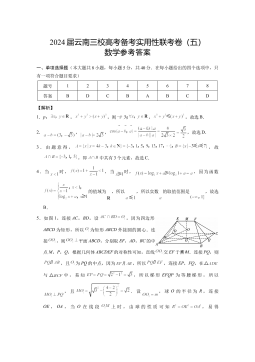
2024届云南三校高考备考实用性联考卷(五)数学-答案和解析-2022-2023学年七年级数学下册同步精品课堂(北师大版)
 2025-01-25 100
 -
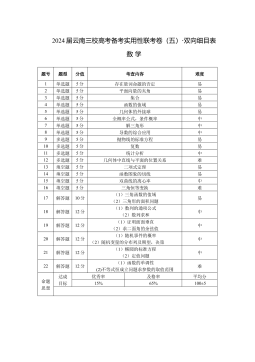
2024届云南三校高考备考实用性联考卷(五)数学 -双向细目表-2022-2023学年七年级数学下册同步精品课堂(北师大版)
 2025-01-25 106
作者:envi
分类:高中
价格:3知币
属性:9 页
大小:65.5KB
格式:DOC
时间:2025-03-04
作者详情

相关内容
-
2024届云南三校高三下学期联考备考实用性联考(七)理科综合试卷-高中生物 -2022-2023学年七年级数学下册同步精品课堂(北师大版)
分类:分省
时间:2025-01-25
标签:无
格式:DOCX
价格:3 知币
-
2024届云南三校高三下学期高考备考实用性联考卷(七)英语试卷 含解析-2022-2023学年七年级数学下册同步精品课堂(北师大版)
分类:分省
时间:2025-01-25
标签:无
格式:DOCX
价格:3 知币
-
2024届云南三校高三下学期高考备考实用性联考卷(七)英语试卷 -2022-2023学年七年级数学下册同步精品课堂(北师大版)
分类:分省
时间:2025-01-25
标签:无
格式:DOCX
价格:3 知币
-
2024届云南三校高考备考实用性联考卷(五)数学-答案和解析-2022-2023学年七年级数学下册同步精品课堂(北师大版)
分类:分省
时间:2025-01-25
标签:无
格式:DOCX
价格:3 知币
-
2024届云南三校高考备考实用性联考卷(五)数学 -双向细目表-2022-2023学年七年级数学下册同步精品课堂(北师大版)
分类:分省
时间:2025-01-25
标签:无
格式:DOCX
价格:3 知币


