
专题02 家庭,朋友和周围的人(2)-2021年高考英语阅读理解话题分类训练


(1)徐州市 2021 届高三 9 月学情调研考试之 C
In a country where many girls are still discouraged from going to school, Sushma Verma is having anything
but a typical childhood.
The 13-year-old girl from a poor family in north India has enrolled in ( 入学登记) a master’s degree in
microbiology, after her father sold his land to pay for some of his daughter’s tuition to help her to be part of India’s
growing middle class.
Verma finished high school at 7 and earned an undergraduate degree at age 13 with the encouragement of her
uneducated and poor parents. “They allowed me to do what I wanted to do,” Verma said, “I hope that other parents
don’t make their children accept their choices.”
Sushma lives with her family in a crowded single-room apartment in Lucknow. Their only income is her
father’s daily wage of up to 200 rupees (less than $3. 50) for laboring on construction sites. Their most precious
possessions include a study table and a second-hand computer. It is not a great atmosphere for studying, she
admitted. But having no television and little else at home has advantages, she said. “There is nothing to do but
study.”
Her first choice was to become a doctor, but she cannot take the test to qualify for medical school until she is
18. “So I chose the master’s of science and then I will do a doctor’s degree,” she said.
In another family, Sushma might not have been able to receive higher education. Millions of Indian children
are still not enrolled in grade school, and many of them are girls whose parents choose to hold them back in favour
of advancing their sons. Some from conservative (守旧的) village cultures are expected only to get married. “The
girl is an inspiration for students who are born with everything”, said Dr. Bindeshwar Pathak of Sulabh
International, who decided to help after seeing a local television program on Sushma. She is also receiving financial
aid from well-wishing civilians and other charities.
8. Which word can best describe Sushma Verma’s father?
A. Strict. B. Educated.
C. Understanding. D. Supportive.
9. Why does the writer mention a study table and a second-hand computer?
A. To show her family enjoy a simple life.
B. To show her family live a very poor life.
C. To tell us her room is poorly furnished.
D. To tell us her room is a great place to study in.
1

10. What made Sushma not qualified to take the test for medical school?
A. Her age. B. Her choice.
C. Her interest. D. Her poverty.
11. What can we infer from paragraph 6?
A. Indian parents treat their sons and daughters equally.
B. Indian parents spend much of their income on education.
C. Indian boys have more chances to receive higher education.
D. Indian girls in the countryside get married when they leave primary school.
【答案】8. D 9. B 10. A 11. C
【解析】
文章介绍 Sushma Verma 虽然生活在一个很多女孩不去上学的国家,但是父母支持她上学,使得她受到良好
的教育,过着不一样的童年。
【8题详解】
细节理解题。根据第二段的内容...her father sold his land to pay for some of his daughter’s tuition to help her
to be part of India’s growing middle class(她的爸爸卖掉土地来支付她的一部分学费)可知,Sushma Verma 的
爸爸对她的选择很支持。故选 D。
【9题详解】
推理判断题。根据第四段的内容描述可知,Sushma 和她的家人住在一个拥挤的单间公寓里,她家的唯一收
入是爸爸在建筑工地的工资。所以文章提到她家最贵重的财产是一个书桌和一台二手电脑是为了显示
Sushma 的家人过着很贫穷的生活。故选 B。
【10 题详解】
细节理解题。根据第五段的内容 Her first choice was to become a doctor, but she cannot take the test to qualify
for medical school until she is 18.可知,是年龄使得 Sushma 不够资格参加医学院的考试。故选 A。
【11 题详解】
推理判断题。根据第六段的内容 Millions of Indian children are still not enrolled in grade school, and many of
them are girls whose parents choose to hold them back in favour of advancing their sons.(数百万的印度孩子仍
然没有上过小学,其中很多是女孩子,他们的父母选择让女孩不上学,支持提高男孩的教育。)可推断,
印度的男孩有更多的机会受到更高的教育。故选 C。
(2)慈溪中学高三 2020-2021 学年上学期 9月月考英语试题之 A篇
The magic of these book-lined buildings---libraries, really filled my childhood with delight. Parenthood helped
2

me experience that joy again.
I was raised in the countryside of Cleveland, just a few blocks from the brick-faced library, Bertram Woods. I
went there several times a week with my mother. She and I would walk in together, but as soon as we passed
through the door, we each headed to our favorite section separately. We all valued books, but my parents believed
that the reading of the book was a journey. There was no need for souvenirs. When I left for college, one of the
many ways I made myself different from my parents was that I went wild for owning books. Buying textbooks was
what got me going, but I lost my appreciation for the slow pace of making my way through a library and for having
books on borrowed time.
I might have spent the rest of my life thinking about libraries in the way I thought about the amusement park I
went to as a kid. And they might have become just a bookmark of memory, something that was mixed
with “mother” and “the past” in my mind. That changed in 2011 when my son got his school homework---to
interview someone who worked for the city. I suggested talking to a police officer, but he said he wanted to
interview a librarian.
As we drove to meet the librarian, I was flooded by a sense of absolute familiarity and the memory of this
journey, of parent and child on their way to the library. I had taken this trip so many times before, but now it was
turned on its head, and I was the parent bringing my child on that special trip.
From the outside, the decoration of the library didn't look anything like the brick Bertram Woods branch, but
when we stepped in, the thunderbolt of recognition struck me so hard that it made me out of breath.
There was the same soft tsk-tsk-tsk of pencil on paper, and the murmuring from readers at the tables in the center
of the room. It brought me close to my mother and our journey to the library.
At that moment
,
the spell that libraries had once cast on me was renewed. Maybe it had never really been
broken, although I had been away long enough that it was like visiting a country I’d loved but had forgotten as my
life went swiftly by.
1. What can we know about the author’s parents?
A. They enjoyed the same favorite section in the library as the author.
B. They valued books and preferred to house them at home.
C. They held different views from the author towards buying books.
D. They loved buying books as souvenirs on their journey.
2. What does the underlined sentence in Paragraph 5 probably mean?
A. The author immediately recognized the familiar outside decoration.
3

标签: #英语阅读
相关推荐
-
2024届云南三校高三下学期联考备考实用性联考(七)文科综合试卷-高中历史 -2022-2023学年七年级数学下册同步精品课堂(北师大版)
 2025-01-25 44
 -
2024届云南三校高三下学期联考备考实用性联考(七)文科综合试卷-高中地理 含解析-2022-2023学年七年级数学下册同步精品课堂(北师大版)
 2025-01-25 78
 -
2024届云南三校高三下学期联考备考实用性联考(七)理科综合试卷-高中物理 含解析-2022-2023学年七年级数学下册同步精品课堂(北师大版)
 2025-01-25 44
 -
2024届云南三校高三下学期联考备考实用性联考(七)理科综合试卷-高中物理 -2022-2023学年七年级数学下册同步精品课堂(北师大版)
 2025-01-25 66
 -
2024届云南三校高三下学期联考备考实用性联考(七)理科综合试卷-高中生物 含解析-2022-2023学年七年级数学下册同步精品课堂(北师大版)
 2025-01-25 59
 -
2024届云南三校高三下学期联考备考实用性联考(七)理科综合试卷-高中生物 -2022-2023学年七年级数学下册同步精品课堂(北师大版)
 2025-01-25 101
 -
2024届云南三校高三下学期高考备考实用性联考卷(七)英语试卷 含解析-2022-2023学年七年级数学下册同步精品课堂(北师大版)
 2025-01-25 89
 -
2024届云南三校高三下学期高考备考实用性联考卷(七)英语试卷 -2022-2023学年七年级数学下册同步精品课堂(北师大版)
 2025-01-25 91
 -
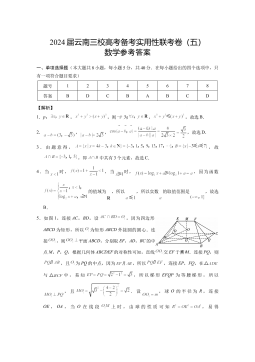
2024届云南三校高考备考实用性联考卷(五)数学-答案和解析-2022-2023学年七年级数学下册同步精品课堂(北师大版)
 2025-01-25 100
 -
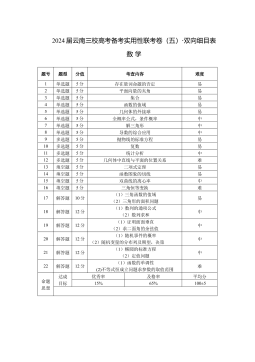
2024届云南三校高考备考实用性联考卷(五)数学 -双向细目表-2022-2023学年七年级数学下册同步精品课堂(北师大版)
 2025-01-25 106
作者:envi
分类:高中
价格:3知币
属性:9 页
大小:66.01KB
格式:DOC
时间:2025-03-04
作者详情

相关内容
-
2024届云南三校高三下学期联考备考实用性联考(七)理科综合试卷-高中生物 -2022-2023学年七年级数学下册同步精品课堂(北师大版)
分类:分省
时间:2025-01-25
标签:无
格式:DOCX
价格:3 知币
-
2024届云南三校高三下学期高考备考实用性联考卷(七)英语试卷 含解析-2022-2023学年七年级数学下册同步精品课堂(北师大版)
分类:分省
时间:2025-01-25
标签:无
格式:DOCX
价格:3 知币
-
2024届云南三校高三下学期高考备考实用性联考卷(七)英语试卷 -2022-2023学年七年级数学下册同步精品课堂(北师大版)
分类:分省
时间:2025-01-25
标签:无
格式:DOCX
价格:3 知币
-
2024届云南三校高考备考实用性联考卷(五)数学-答案和解析-2022-2023学年七年级数学下册同步精品课堂(北师大版)
分类:分省
时间:2025-01-25
标签:无
格式:DOCX
价格:3 知币
-
2024届云南三校高考备考实用性联考卷(五)数学 -双向细目表-2022-2023学年七年级数学下册同步精品课堂(北师大版)
分类:分省
时间:2025-01-25
标签:无
格式:DOCX
价格:3 知币


