
假期提分组合高效练01(原卷版)-备战高考英语假期提分组合高效练(完形填空+阅读理解+语法填空)


备战 2022 年高考英语假期提分组合高效练 01
(完形填空+阅读理解+语法填空)
一、完形填空
1
How much do you know about athletes? Many people regard watching sports games as a form of 1 . But for
athletes, they are challenging the 2 of human beings and breaking boundaries. Intensive training is a task which
they do every day as a matter of 3 . On May 6, 1954, Roger Bannister, who ran a mile in 3 minutes, 59.4
seconds, 4 the whole world’s attention. People believed that it was 5 imagination for a person to run a mile
within 4 minutes. Bannister made a(n)
6 in what people believed was impossible. In the years since, more and more athletes have overcome the
four—minute—mile 7 . Today, the record—held by Hicham El Guerrouj of Morocco since July 7, 1999— 8
at 3 minutes and 43. 13 seconds!
Records are 9 at a lower and lower rate in both running and other fields. When new records are set, they're
changed by a small proportion of a(n) 10 . The decimal point(小数点),set at one- tenth of a second for
Bannister's record, now 11 one-hundredth of a second. 12 , we'll have to go to a third decimal place, and then
a fourth.
The closer athletes get to being 13 , the harder it is to make improvements. Even though they are 14 the
best performances of human beings, excellent athletes can still 15 proportions of seconds off existing records.
They have a real 16 to break records. The gaps between new and old records decrease 17 . Athletes are
getting closer and closer to physiological 18 performances all the time. It will be tougher and tougher 19 .
However, excellent athletes never 20 trying.
1. A. attention B. contribution C. recreation D. communication
2. A. beliefs B. rights C. strengths D. limits
3. A. routine B. situation C. experience D. opinion
4. A. required B. avoided C. attracted D. disturbed
5. A. beyond B. within C. from D. by
6. A. cut B. division C. involvement D. breakthrough
7. A. difference B. barrier C. habit D. fear
8. A. aims B. shoots C. works D. stands
9. A. updated B. held C. checked D. established
10. A. minute B. hour C. second D. day
11. A. contains B. measures C. means D. covers
12. A. Instead B. Soon C. Meanwhile D. Besides
13. A. honest B. strong C. perfect D. ordinary
14. A. assessing B. affecting C. expecting D. approaching
15. A. shave B. keep C. pay D. knock
16. A. history B. struggle C. change D. inspiration
17. A. quickly B. finally C. normally D. gradually
18. A. satisfactory B. peak C. consistent D. fair
19. A. making sense B. taking effect C. making progress D. losing heart
1

20. A. stop B. remember C. start D. suggest
2
A study from Switzerland’s Université de Genève(UNIGE) looked to answer the question of which came first:
a decrease in physical activity or cognitive (认知的) decline?
“Interrelationships have been 21 between these two factors, particularly in terms of memory but also
regarding the growth and survival of new neurons ( 神经元).” said Boris Cheval, a researcher at UNIGE’S Swiss
Centre for Affective Sciences (CISA) in a press release. “But we have never yet 22 tested which comes first:
Does physical activity prevent a decline in cognitive skills or 23 ? That’s what we wanted to 24 .”
Earlier studies have considered that physical activity 25 cognitive decline. But according to Cheval, recent
studies may 26 that past research has “only told half the story… since those recent studies demonstrate that our
brain is 27 when it comes to engaging in physical activity.”
Researchers at UNIGE tested the two possible 28 by using data from the Survey of Health, Aging and
Retirement in Europe, a socioeconomic database covering more than 25 countries across the continent.
Over the course of 12 years, 105, 206 adults 29 in age from 50 to go were tested every two years on their
cognitive abilities and their physical activity.
Researchers 30 cognitive abilities with a verbal fluency test that saw participants name as many animals as
they could in 60 seconds. They also tested cognitive abilities with a 31 test where they memorized 10 words
before reciting them. Physical activity was measured using a scale from 1 to 4. A 1 indicated participants “never”
32 physical activity while a 4 meant they were physically 33 “more than once a week”.
The study found that the 34 of what past studies concluded was true ― cognitive abilities mostly influence
physical activity, not the other way around.
“This study backs up our theory that the brain has to make a real effort to get out of a sitting lifestyle and that
by 35 cognitive capabilities, physical activity will follow,” Cheval said.
21. A. neglected B. prevented C. confused D. established
22. A. formally B. separately C. individually D. casually
23. A. at times B. vice versa C. by chance D. in part
24. A. release B. admit C. confirm D. oppose
25. A. prevents B. encourages C. influences D. reduces
26. A. mislead B. contradict C. ignore D. indicate
27. A. abandoned B. involved C. entertained D. processed
28. A. factors B. elements C. options D. subjects
29. A. ranging B. judging C. expanding D. varying
30. A. balanced B. restricted C. surveyed D. measured
31. A. observation B. reflection C. memory D. imitation
32. A. concerned about B. engaged in C. stood for D. gave up
33. A. motionless B. casual C. active D. passive
34. A. consequence B. similarity C. difference D. opposite
35. A. working on B. reflecting over C. crossing out D. putting off
二、阅读理解
1
At the 4th Street Photo Gallery on the comer of the Bowery, many photos are strung together like clothes on a
laundry line. There are portraits of Muhammad Ali and Jean-Michel Basquiat, plus a series of cityscapes detailedly
captured over 60 years by Alex Harsley, a neglected but talented New York photographer.
2

The city has been Mr Harsley’s home since 1948, when, aged ten, he moved there from South Carolina. He
took his first photograph ten years later, and became the first black photographer to work for the city’s district
attorney’s office. His vivid pictures freeze moments in New York’s evolution from the 1950s to the present. “It
could start with the smell of something burning.” he says of his method. “And then you see a family sitting on the
steps of a funeral home sadly looking at the firemen going through their routine.”
Some of the scenes in the collection were captured from the window of his old apartment in Harlem; they
include images of black activists, streets submerged in snow and shots of the Crown Heights riots of 1991. A . D.
Coleman, a photography critic, says Mr. Harsley has been able to capture the lives of minority groups by making
himself “invisible”. His aim has been to assemble these fragments (片段) into an extended history of the city.
Mr. Harsley’s gallery is a time capsule. For decades, it is also a hub for the city’s artistic underworld. In the
1970s New York’s photography scene was flourishing, but exclusive. As Mr. Harsley puts it, “a number of great
artists were swept aside” because they lacked connections. Helping talent became part of his mission. In 1971 he
established The Minority Photographers, an organization that helps up-and-coming artists exhibit their work. He
opened his gallery two years later; many photographers have had their first shows there.
36. How does the author describe Alex Harsley in the first paragraph?
A. Undervalued but expert. B. Gifted but exclusive.
C. Unknown but devoted. D. Gifted but awkward.
37. What does the underlined sentence mean?
A. His pictures show freezing weather in New York from the 1950s to the present.
B. His pictures capture the cheerful moments in New York since the 1950s.
C. His pictures record some historic occasions of New York over the past decades.
D. His pictures illustrate the vivid lives of minority groups in New York over the past decades.
38. Why does Mr. Harsley make himself “invisible”?
A. To assemble the minority groups of the city.
B. To highlight the lives of minority groups.
C. To help promising artists attract more public attention.
D. To build connections between the minority groups and himself.
39. How did Mr. Harsley help the other artists?
A. He excluded those who looked down upon the unknown artists.
B. He set an organization displaying their works.
C. He established the connections between up-and-coming artists and famous ones.
D. He reduced the rents of the gallery where their photography works were shown.
2
“Runners, to your mark, Get set…” Bang! And I was off, along with a bunch of other teenage cross-country
runners from high schools across the county. The day was like any other fair-weather autumn day in Maryland. But
the race that day felt unique from the get-go. For one thing, I liked the course. It was my team’s home course, one I
was used to running during practices. It took runners along an area of land that included open fields, hills and even
winding dirt paths through a small forest. It was a beautiful 5-kilometer course. This particular race was our team’s
invite, and I was proud to be sharing the course with competitors from other schools. It also meant a lot―more than
normal that my parents were there to cheer me on.
With so much to expect that day, I was ready to run! And I didn’t want to be stuck with the pack of other
runners, as is typical at the beginning of most cross-country races. So when the gun sounded, I took off running,
leaving everyone else in the dust.
The first part of our course followed the outside edge of a large open field before disappearing into the forest.
3

标签: #语法填空
相关推荐
-
2024届云南三校高三下学期联考备考实用性联考(七)文科综合试卷-高中历史 -2022-2023学年七年级数学下册同步精品课堂(北师大版)
 2025-01-25 44
 -
2024届云南三校高三下学期联考备考实用性联考(七)文科综合试卷-高中地理 含解析-2022-2023学年七年级数学下册同步精品课堂(北师大版)
 2025-01-25 78
 -
2024届云南三校高三下学期联考备考实用性联考(七)理科综合试卷-高中物理 含解析-2022-2023学年七年级数学下册同步精品课堂(北师大版)
 2025-01-25 44
 -
2024届云南三校高三下学期联考备考实用性联考(七)理科综合试卷-高中物理 -2022-2023学年七年级数学下册同步精品课堂(北师大版)
 2025-01-25 66
 -
2024届云南三校高三下学期联考备考实用性联考(七)理科综合试卷-高中生物 含解析-2022-2023学年七年级数学下册同步精品课堂(北师大版)
 2025-01-25 59
 -
2024届云南三校高三下学期联考备考实用性联考(七)理科综合试卷-高中生物 -2022-2023学年七年级数学下册同步精品课堂(北师大版)
 2025-01-25 101
 -
2024届云南三校高三下学期高考备考实用性联考卷(七)英语试卷 含解析-2022-2023学年七年级数学下册同步精品课堂(北师大版)
 2025-01-25 89
 -
2024届云南三校高三下学期高考备考实用性联考卷(七)英语试卷 -2022-2023学年七年级数学下册同步精品课堂(北师大版)
 2025-01-25 91
 -
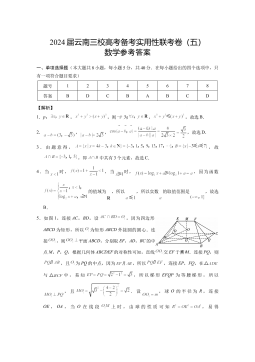
2024届云南三校高考备考实用性联考卷(五)数学-答案和解析-2022-2023学年七年级数学下册同步精品课堂(北师大版)
 2025-01-25 100
 -
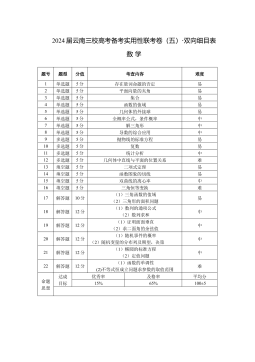
2024届云南三校高考备考实用性联考卷(五)数学 -双向细目表-2022-2023学年七年级数学下册同步精品课堂(北师大版)
 2025-01-25 106
作者:envi
分类:高中
价格:3知币
属性:8 页
大小:381.4KB
格式:DOC
时间:2025-03-05
作者详情

相关内容
-
2024届云南三校高三下学期联考备考实用性联考(七)理科综合试卷-高中生物 -2022-2023学年七年级数学下册同步精品课堂(北师大版)
分类:分省
时间:2025-01-25
标签:无
格式:DOCX
价格:3 知币
-
2024届云南三校高三下学期高考备考实用性联考卷(七)英语试卷 含解析-2022-2023学年七年级数学下册同步精品课堂(北师大版)
分类:分省
时间:2025-01-25
标签:无
格式:DOCX
价格:3 知币
-
2024届云南三校高三下学期高考备考实用性联考卷(七)英语试卷 -2022-2023学年七年级数学下册同步精品课堂(北师大版)
分类:分省
时间:2025-01-25
标签:无
格式:DOCX
价格:3 知币
-
2024届云南三校高考备考实用性联考卷(五)数学-答案和解析-2022-2023学年七年级数学下册同步精品课堂(北师大版)
分类:分省
时间:2025-01-25
标签:无
格式:DOCX
价格:3 知币
-
2024届云南三校高考备考实用性联考卷(五)数学 -双向细目表-2022-2023学年七年级数学下册同步精品课堂(北师大版)
分类:分省
时间:2025-01-25
标签:无
格式:DOCX
价格:3 知币


