
广东省肇庆市第一中学2022-2023学年高三下学期2月适应性测试 英语 试题

肇庆市第一中学高三年级第二学期 2月适应性测试
英语
本试卷共 8页,满分 120 分。考试用时 120 分钟。
注意事项:1.答卷前,考生务必用 2B 铅笔将自己的姓名、考生号、考场号和
座位号填写在答题卡上的指定位置。
2.作答选择题时,选出每小题答案后,用铅笔把答题卡上对应题目选项的答案
信息点涂黑;如需改动,用橡皮擦干净后,再选涂其他答案。非选择题必须,答
案必须写在答题卡各题目指定区域内相应位置上写在本试卷上无效。
3.考试结束后,将试卷和答题卡一并交回。
第一部分 阅读(共两节,满分 50 分)
第一节(共15 小题:每小题 2.5 分,满分 37.5 分)
阅读下列短文,从每题所给的 A、B、C、D四个选项中选出最佳选项。
A
Do you want to travel to the New England Aquarium and experience it? If you are an
aquarium super fan, I believe you must be interested in some information below.
Animal Encounter Programs
Dive into the water with a seal. Stand on top of the four storey Giant Ocean Tank to feed the
animals. Go behind the scenes of your favorite exhibits. Whether you have an unquenchable
curiosity about oceanic animals or you want a brand-new observation on popular exhibits,
fascinating Animal Encounter Programs are designed for the Aquarium super fans. Call Central
Reservations at 617-973-5206 to book your program.
Daily Performances
Don’t miss a day in the life of the New England Aquarium. Be sure to catch our daily events,
which include penguin feedings, seal training sessions, dives in the Giant Ocean Tank and live
animal performances. Our daily schedule will tell you when and where to watch your favorite
program. All programs are included with admission.
Special Programs
Join us for family activities at the Aquarium, where we explore the blue planet most days
through art, animals and other activities. We focus on one animal every month with Blue
Discoveries Family Day, from octopuses to whales. These activities are included with admission.
For a fee, schools and other qualifying groups can also choose Explorer Classes for kids and
special 3-D showings.
Virtual Tours and Videos
Before stepping foot in the Aquarium, explore some of our special exhibits and learn what to
expect. Check out the Field Trip Orientation video before arriving with your group. The How to
Be a Shark and Ray Whisperer video gives special instructions on how to best experience our
shark and ray touch tank. The Blue Impact virtual tour highlights some of our exhibits as it
explains the impact of climate change on oceans around the world.
1. Where is this text probably taken from?

A. A magazine. B. A guidebook.
C. A textbook. D. An academic article.
2. Which activity is NOT included with admission?
A. Penguin feedings. B. Seal training sessions.
C. live animal performances. D. Explorer Classes.
3. What’s the purpose of Virtual Tours and Videos?
A. To help visitors best experience the aquarium.
B. To draw attention to climate change on oceans.
C. To sell video disks of the aquarium to the visitors.
D. To give instructions on how to protect oceanic animals.
B
What kind of people can become scientists? When a group of researchers posed that question
to ninth-and 10th-graders, almost every student gave such responses as “People who work
hard” or “Anyone who seems interested in the field of science.”
Many of these same students struggled to imagine themselves as scientists, citing concerns
such as “I’m not good at science” and “Even if I work hard, I will not do well.” It’s easy for
them to see a scientist’s work as arising from an inborn talent.
But for high school students, learning more about some struggles of scientists can help
students feel more motivated to learn science. Researchers at Teachers College, Columbia
University and the University of Washington designed an intervention to change students’ beliefs
that scientific achievement depends on ability rather than effort by exposing students to stories of
how accomplished scientists struggled and overcame challenges in their scientific efforts.
During the study, the students read one of three types of stories about Albert Einstein, Marie
Curie and Michael Faraday. Intellectual( 智 力 的 )struggle stories: stories about how scientists
“struggled intellectually,” such as making mistakes while addressing a scientific problem and
learning from them. Life struggle stories: stories about how scientists struggled in their personal
lives, such as not giving up in the face of poverty or lack of family support. Achievement stories:
stories about how scientists made great discoveries, without any discussion of coexisting
challenges.
Researchers found that students who heard either type of “struggle stories” improved their
science performance after-intervention, compared to students in the control group. The effect was
especially pronounced for lower performing students, for whom exposure to struggling stories led
to significantly better science-class performance than low-performing students who read
achievement stories. In addition, students who read struggle stories reported feeling more
personally connected to the scientists. By recognizing a scientist’s struggles and introducing the
growth mindset he or she applied to accomplish great works, the students were able to
empathize(共情)with the scientists during their own struggles.
4. Why do students fail to imagine themselves as scientists?
A. They lack interest in science. B. They are short of confidence
C. They don’t have inborn talent. D. They have no ability to study science
5. What’s the purpose of the intervention?
A. To introduce some inspirational stories to students.
B. To expose students to scientists’ great achievements.
C. To ensure students will become scientists in the future.
D. To clear students’ misunderstandings of scientific work.
6. The underlined word “pronounced” in the last paragraph is closest in meaning to________.
A. minimal B. noticeable C. doubtful D. long-
lasting
7. What can we learn from the research?
A. Science ability has nothing to do with efforts.
B. Students are more motivated by achievement stories.
C. Scientists’ struggle stories can influence readers’ beliefs.
D. Low-performing students tend to feel connected to scientists.
C
It is likely that most people have the shared feeling: how come Christmas appears to come
around quicker and quicker each year? Questionnaires by psychologists have shown almost
everyone feels time is passing faster now compared to when they were half or a quarter as old.
Most strikingly, lots of experiments have shown that, when older people are asked to guess how
long the time is, or to “reproduce” the length of periods of time, they guess a shorter amount than
younger people.
In 1877, Paul Janet suggested the proportional theory, where a child of 10 feels a year as 1/10
of his whole life while a man of 50 as 1/50, so the subjective sense of the 50-year-old man is that
these are insignificant periods of time.
There are also biological theories. The speeding up of time is linked to how our
metabolism(新陈代谢) gradually slows down as we grow older. Children’s hearts beat faster than
adults’. They breathe more quickly. With their blood flowing more quickly, their body clocks
“cover” more time within the space of 24 hours than ours do as adults. On the other hand, older
people are like clocks that run slower than normal, so that they lag behind, and cover less than 24
hours.
In the 1930s, the psychologist Hudson Hoagland found body temperature causes different
perceptions of time. Once, when he looked after his ill wife, he noticed she complained he’d been
away for a long time even if only away for a few moments. Therefore, Hoagland tested her
perception of time at different temperatures, finding the higher her temperature, the more time
seemed to slow down for her, and that raising a person’s body temperature can slow down his
sense of time passing by up to 20%.
Time doesn’t necessarily have to speed up as we get older though. It depends on how we live

相关推荐
-
2024届云南三校高三下学期联考备考实用性联考(七)文科综合试卷-高中历史 -2022-2023学年七年级数学下册同步精品课堂(北师大版)
 2025-01-25 48
 -
2024届云南三校高三下学期联考备考实用性联考(七)文科综合试卷-高中地理 含解析-2022-2023学年七年级数学下册同步精品课堂(北师大版)
 2025-01-25 82
 -
2024届云南三校高三下学期联考备考实用性联考(七)理科综合试卷-高中物理 含解析-2022-2023学年七年级数学下册同步精品课堂(北师大版)
 2025-01-25 46
 -
2024届云南三校高三下学期联考备考实用性联考(七)理科综合试卷-高中物理 -2022-2023学年七年级数学下册同步精品课堂(北师大版)
 2025-01-25 67
 -
2024届云南三校高三下学期联考备考实用性联考(七)理科综合试卷-高中生物 含解析-2022-2023学年七年级数学下册同步精品课堂(北师大版)
 2025-01-25 65
 -
2024届云南三校高三下学期联考备考实用性联考(七)理科综合试卷-高中生物 -2022-2023学年七年级数学下册同步精品课堂(北师大版)
 2025-01-25 102
 -
2024届云南三校高三下学期高考备考实用性联考卷(七)英语试卷 含解析-2022-2023学年七年级数学下册同步精品课堂(北师大版)
 2025-01-25 91
 -
2024届云南三校高三下学期高考备考实用性联考卷(七)英语试卷 -2022-2023学年七年级数学下册同步精品课堂(北师大版)
 2025-01-25 95
 -
2024届云南三校高考备考实用性联考卷(五)数学-答案和解析-2022-2023学年七年级数学下册同步精品课堂(北师大版)
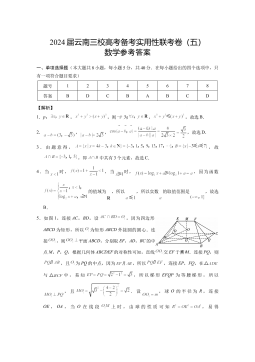 2025-01-25 101
 -
2024届云南三校高考备考实用性联考卷(五)数学 -双向细目表-2022-2023学年七年级数学下册同步精品课堂(北师大版)
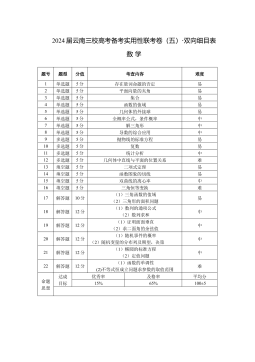 2025-01-25 109
作者:envi
分类:分省
价格:3知币
属性:10 页
大小:45.69KB
格式:DOCX
时间:2024-11-30
作者详情

相关内容
-
《2022-2023学年高二化学同步精品课堂(人教版选修4)》1.1.3 中和反应的反应热及其测量(解析版)
分类:高中
时间:2025-05-15
标签:无
格式:DOCX
价格:3 知币
-
《2022-2023学年高二化学同步精品课堂(人教版选修4)》1.1.2 热化学方程式(原卷版)
分类:高中
时间:2025-05-15
标签:无
格式:DOCX
价格:3 知币
-
《2022-2023学年高二化学同步精品课堂(人教版选修4)》1.1.2 热化学方程式(解析版)
分类:高中
时间:2025-05-15
标签:无
格式:DOCX
价格:3 知币
-
《2022-2023学年高二化学同步精品课堂(人教版选修4)》1.1.1 焓变 反应热(解析版)
分类:高中
时间:2025-05-15
标签:无
格式:DOCX
价格:3 知币
-
《2022-2023学年高一化学同步课时核心考点讲与练(人教2019必修第一册)》课时02 分散系及其分类(精练)(原卷版)
分类:高中
时间:2025-05-15
标签:无
格式:DOCX
价格:3 知币


